
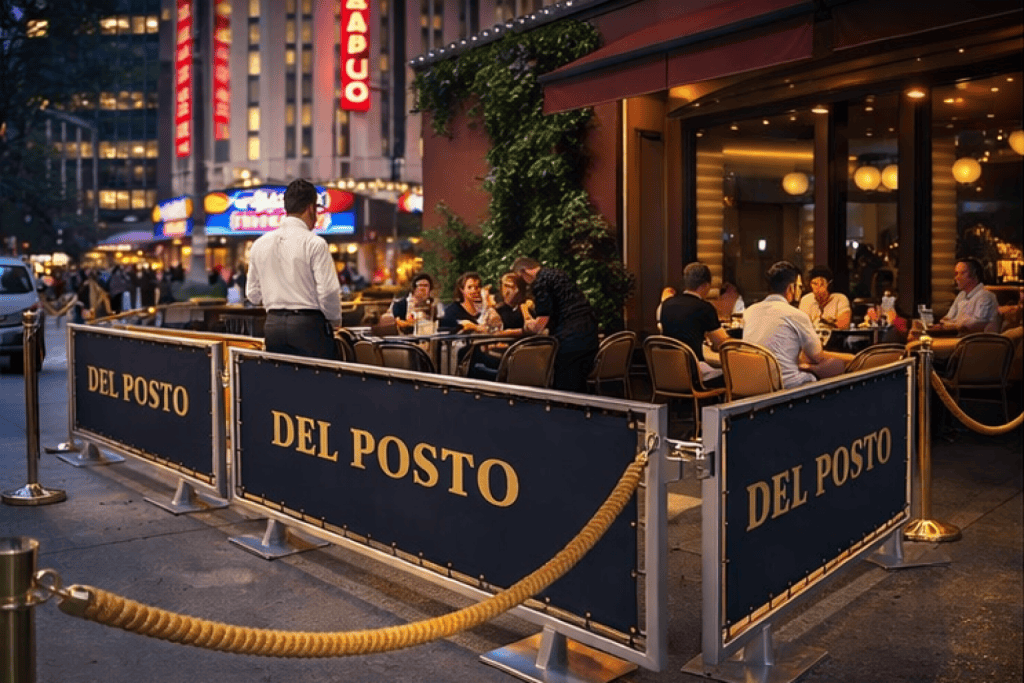
Aluminum Patio Barriers: Why Do Restaurants Choose Aluminum Panels?
When you are choosing patio barriers for outdoor dining in NYC, Long Island, NJ, Philadelphia, MD, or DC, the material matters as much as the layout. At Quality Sidewalk Barricades, we are a 75+ year family-owned business, and we have seen aluminum become the practical choice when owners want lighter sections, easier upkeep, and long outdoor service.
TL;DR: Summary
- Aluminum patio barriers are a strong fit for restaurant outdoor dining when your main priorities are corrosion resistance, low maintenance, lighter handling, and long service life.
- The Aluminum Association describes aluminum as durable, corrosion resistant, and high in strength-to-weight ratio, which is why it has stayed common in building use since the 1920s.
- The U.S. General Services Administration notes that aluminum forms a thin aluminum oxide layer in air, helping it resist atmospheric gases, moisture, and soil.
- Not all aluminum performs the same. Alloy choice, finish, fasteners, and contact with wet wood or some masonry conditions still affect outdoor performance.
- If you want a custom restaurant barrier system, aluminum works especially well for modular runs, branded panels, removable sections, and in-house American fabrication with site-specific sizing.
- For budgeting, our baseline pricing starts at $135 per linear foot, then changes with panel style, graphics, gates, planters, engineering, and installation scope.
That does not mean every aluminum system is equal. Finish type, panel design, fastener details, and approval requirements from NYC DOT, Dining Out NYC, NYC DOB, Philly Streets Department, Philly L&I, MD jurisdictions, DC DDOT, or DC DCRA still decide whether the barrier works well on your block.
Why are aluminum patio barriers a strong choice for sidewalk dining?
Yes. Aluminum patio barriers are a practical long-term choice for restaurants in Manhattan and Philadelphia because they combine corrosion resistance, lighter weight, and steady outdoor durability in one material.
Authoritative sources agree on the basics. The Aluminum Association describes aluminum as durable, corrosion resistant, and known for a high strength-to-weight ratio. That matters on a restaurant frontage because a barrier has to hold its shape, look presentable, and still be manageable when layouts change, sections need service, or removable pieces are required.
“Quality Sidewalk Barricades is 75+ years family-owned and fabricates custom aluminum patio barriers in-house in America.”
We see that play out in real jobs. Aluminum lets us fabricate custom sidewalk café barricade systems to exact site measurements, build modular or removable sections, and keep weights more manageable than many comparable steel assemblies. We crate and ship complete systems nationwide and internationally, and the lighter material helps there too.
How does aluminum resist corrosion in outdoor patio barriers?
It does. The U.S. General Services Administration says aluminum forms a thin aluminum oxide layer when exposed to air, and that layer helps protect the base material outdoors.
That oxide layer is the plain-English reason aluminum usually holds up well around rain, humidity, and day-to-day exposure. The same GSA guidance says aluminum has good corrosion resistance to atmospheric gases, moisture, and soil. If your restaurant patio sits near curb splash, wet pavement, or regular washdowns, that is a real advantage.
“Quality Sidewalk Barricades often recommends aluminum when restaurants want low-maintenance panels that still stand up to regular outdoor exposure.”
There is a catch, and many owners miss it. Corrosion resistant does not mean immune to bad detailing. The GSA also notes aluminum can corrode when it is in contact with certain materials, including wet wood and some masonry conditions, so good patio barrier design needs separation details, proper fasteners, and smart installation.
What are the 5 reasons to choose aluminum patio barriers?
They are practical for most restaurant use. The five strongest reasons are corrosion resistance, lower handling weight, lower maintenance, flexible design options, and long-term value.
If your goal is a barrier that works hard without constant refinishing or awkward seasonal handling, aluminum usually stays near the top of the list.
- Corrosion resistance: Aluminum is widely recognized for outdoor corrosion resistance, which is a major reason it is used in building applications and exposed site conditions.
- Lighter sections: A lighter material makes modular layouts, removable runs, and shipped systems easier to handle than heavier all-steel alternatives.
- Lower upkeep: Commercial-grade aluminum with powder coat finish usually asks for cleaning and inspection, not the recurring rust treatment many owners worry about with neglected steel.
- Design flexibility: Aluminum works well with rail systems, solid panels, perforated metal, mesh, acrylic or polycarbonate infill, and logo graphics without forcing one visual style.
- Long service value: If you are planning multi-season outdoor dining, aluminum often gives you a cleaner life-cycle choice than materials that add repainting, rust repair, or difficult reconfiguration.
How do you choose the right aluminum panel style for your restaurant patio?
Start with use case first. In NYC and DC, the right aluminum patio barrier style depends on sightlines, wind, branding, removability, and agency requirements.
Step 1 is to define what the barrier has to do. An aluminum rail system in commercial-grade aluminum with powder coat finish, often planned around the common 36 to 42 inch range used in outdoor dining barriers, is good when you need edge definition without making the frontage feel closed in. A solid or perforated aluminum panel gives more privacy and stronger branding space.
Step 2 is to match the infill to the site. Glass panel with aluminum framing helps when visibility and wind control matter. Acrylic or polycarbonate infill can work when you want a clearer look with less weight than glass. Metal mesh and perforated panel styles make sense when airflow matters more than wind blocking.
Step 3 is to plan removability early. If the restaurant stores sections seasonally, modular and removable aluminum panels are usually the safer call. A common mistake is choosing a fixed heavy configuration first and only later realizing the staff has to move it.
How do aluminum patio barriers compare with steel pipe and rail systems?
Aluminum is usually easier to handle, while steel pipe and rail can make sense where extra mass is wanted. NYC and NJ projects often come down to that trade-off.
Steel pipe and rail has a familiar look and can be useful when a project needs a heavier visual presence. Still, steel depends more heavily on finish condition. If the coating is damaged and maintenance slips, rust becomes part of the conversation much sooner.
“Quality Sidewalk Barricades installs across NYC, Long Island, NJ, Philadelphia, MD, and DC, and aluminum is often the easier choice when removability and handling matter.”
Aluminum usually wins when restaurants want modular sections, branded panels, faster handling, or shipped systems. A common misconception is that heavier always means better. In outdoor dining, better often means the barrier fits the site, meets agency rules, and does not become a maintenance burden.
How do aluminum patio barriers compare with glass or acrylic infill systems?
Aluminum panels give privacy and simpler upkeep, while glass and acrylic give openness. Manhattan and Brooklyn restaurants often choose between those visual goals first.
A glass panel with aluminum framing can look clean and preserve sightlines, but glass adds weight and cleaning labor. Fingerprints, water spots, and breakage concerns are real. Acrylic or polycarbonate infill lowers weight, yet those materials can show scratches over time depending on use and cleaning habits.
Aluminum panel systems are more forgiving in daily service. They also suit logo graphics and opaque branding better. If your frontage needs a wind break and a see-through look, glass or acrylic may be worth it. If you want easier care and stronger visual separation from traffic, aluminum panels usually make more sense.
How should you plan permitting for aluminum patio barriers in NYC, Philadelphia, MD, or DC?
Plan permitting early. Agencies like NYC DOT, NYC DOB, Philly Streets Department, Philly L&I, DC DDOT, and DC DCRA care about layout, clearance, and construction details, not just material choice.
Step 1 is a real site survey. You need curb conditions, frontage dimensions, entrance swings, grade changes, and clear pedestrian path documented before design decisions are locked. In NYC, Dining Out NYC requirements can shape how the barrier sits in relation to the roadway and sidewalk condition.
Step 2 is matching the design to the jurisdiction. Philadelphia may involve both the Streets Department and L&I. DC can involve DDOT and DCRA. MD review varies by jurisdiction. We work through drawings, engineering when needed, and permit support, but no honest fabricator should promise approval before the agencies review the file.
Step 3 is building the barrier around approved conditions, not wishful assumptions. If the permit set calls for modular sections, defined clearances, or specific attachment logic, the fabrication should reflect that from the start.
How do you estimate aluminum patio barrier cost at $135 per linear foot?
Use linear footage as the starting point. Our baseline pricing for custom sidewalk café barricades is $135 per linear foot, then the design details move the number up or down.
Step 1 is to measure the true run length, including returns, corners, openings, and any gate locations. A rough frontage number is not enough. Twenty linear feet in a straight run is not the same job as twenty linear feet with turns, planters, and a branded entry point.
Step 2 is to choose the panel build. Aluminum rail sections, solid panels, perforated metal, glass with aluminum framing, acrylic or polycarbonate infill, planter-integrated designs, and removable modules all change fabrication time and hardware needs.
“Quality Sidewalk Barricades starts aluminum patio barrier budgeting at $135 per linear foot, with site-specific pricing for branding, gates, engineering, and installation.”
Step 3 is to separate fabrication from project extras. Permit drawings, engineering, installation in NYC or Philadelphia, crating for shipment, and custom graphics should be discussed plainly so you can compare options without quote games.
What installation details keep aluminum patio barriers performing longer?
Good detailing matters as much as good material. Aluminum and stainless-compatible hardware perform well when the installation keeps water, debris, and incompatible contact points under control.
The first detail is separation. Remember the GSA caution about contact with wet wood and some masonry conditions. As Knabstrup Tegl notes in its guidance on efflorescence and salt movement in masonry, moisture and soluble salts at the base of walls can migrate and create highly alkaline, wet interfaces, which is exactly the kind of condition that accelerates galvanic problems if aluminum isn’t isolated. Pro tip: drainage and isolation details are not small extras. They are part of the material decision.
The second detail is fabrication discipline. When we discuss manufacturing and quality, we always come back to 100% in-house American fabrication. Site-specific dimensions, properly fitted modules, and consistent finish work help the system sit correctly, drain properly, and stay easier to maintain over time.
What else do restaurants ask about aluminum patio barriers?
Yes, a few recurring questions come up on almost every restaurant project. They usually relate to strength, fading, removability, and shipping.
Are aluminum patio barriers strong enough for busy sidewalks?
Yes, when they are properly designed for the site. The point is not just raw metal strength. It is how the full system is engineered, fabricated, and installed for the actual frontage, clearance, and approval conditions.
Do aluminum panels hold their color outdoors?
Often yes, especially when the system uses a proper exterior finish. Some aluminum products are specifically designed for UV resistance and color stability in exposed environments, which is one reason finish specification matters.
Can aluminum patio barriers be removable?
Yes. Aluminum is well suited to modular and removable configurations because the material is lighter than many steel alternatives. That makes seasonal handling and storage planning much easier.
Can you get custom branding on aluminum patio barriers?
Yes. Aluminum panels are a practical base for logo graphics, branded infill, and custom visual treatments. Restaurants that want a strong street presence often find aluminum simpler to brand than clear-panel systems.
If you want help planning aluminum patio barriers for a restaurant in NYC, Long Island, NJ, Philadelphia, MD, or DC, call +1 (800) 561-6522 or visit the contact/shop page.